Kategoria: Aktualności

  • Teatrzyk Horyzont – Futerko jeżyka

    Teatrzyk Horyzont – Futerko jeżyka

    Dziś nasze przedszkole odwiedzili aktorzy z Teatru Horyzont, którzy zabrali dzieci w niezwykły świat bajki pt. „Futerko jeżyka”. 🦔✨

    Podczas spektaklu przedszkolaki z zainteresowaniem śledziły losy bohaterów, przeżywając wraz z nimi radosne i pouczające chwile. Przedstawienie w przystępny i pełen humoru sposób pokazało dzieciom, że nie zawsze to, co piękne i atrakcyjne, jest najlepsze, a o wartości drugiego człowieka nie świadczy jego wygląd ani to, co posiada. Bajka przypomniała nam, jak ważne są życzliwość, akceptacja, szacunek i dostrzeganie w innych tego, co naprawdę wartościowe. Spotkanie z teatrem dostarczyło naszym przedszkolakom wielu uśmiechów, radości i cennych przemyśleń. To była wspaniała lekcja, że prawdziwe piękno kryje się w sercu! Dziękujemy aktorom Teatru Horyzont za to pełne humoru i wartościowych przesłań spotkanie!

  • Tydzień Przeciwdziałania Przemocy Rówieśniczej

    Tydzień Przeciwdziałania Przemocy Rówieśniczej

    W dniach 28 września – 2 października obchodziliśmy Tydzień Przeciwdziałania Przemocy Rówieśniczej. Z tej okazji przeprowadziliśmy z dziećmi cykl zajęć poświęconych budowaniu bezpiecznych, życzliwych i pełnych szacunku relacji z rówieśnikami.

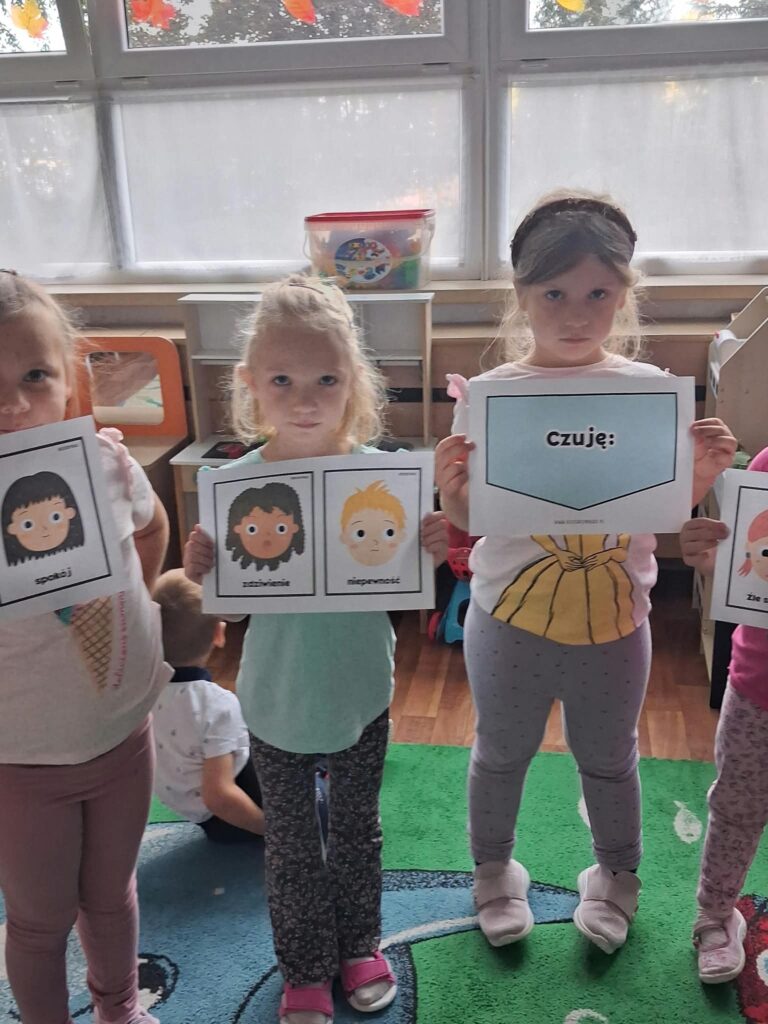
    Podczas spotkań rozmawialiśmy o emocjach – uczyliśmy się je rozpoznawać, nazywać i wyrażać w sposób bezpieczny, z poszanowaniem uczuć innych osób. Dzieci odgrywały scenki przedstawiające różne sytuacje związane z przemocą i niewłaściwymi zachowaniami. Wykorzystując ilustracje oraz przygotowane ćwiczenia, wspólnie zastanawialiśmy się, czym różnią się dobre i krzywdzące zachowania oraz jak reagować, gdy ktoś doświadcza przykrości ze strony innych.

    Szczególną uwagę poświęciliśmy temu, jak ważne jest szukanie pomocy u osób dorosłych w sytuacjach zagrożenia, otwarte mówienie o swoich emocjach oraz reagowanie, gdy komuś dzieje się krzywda.

    Wierzymy, że budowanie dobrych relacji zaczyna się od małych gestów – życzliwego słowa, empatii, wzajemnego szacunku i gotowości do niesienia pomocy. 💛

    Pamiętajmy, że każdy zasługuje na bezpieczeństwo, akceptację i dobre traktowanie!

  • Urodziny Miasta Zabrze 26.09.2027 r.

    Urodziny Miasta Zabrze 26.09.2027 r.

    ❤️ 104. URODZINY MIASTA ZABRZE ❤️🎉

    Wczoraj, 26 września, mieliśmy ogromną przyjemność uczestniczyć w wyjątkowym wydarzeniu 104. urodzinach naszego miasta Zabrze.
    Przedszkolaki z grupy „Perełek” oraz „Lisków” wzięły udział w pięknej i niezwykle barwnej paradzie, która przeszła w Parku Miejski Dubiela.
    Było mnóstwo radości, uśmiechów, energii i dziecięcego entuzjazmu. ❤️
    Cieszyły się nie tylko nasze przedszkolaki, ale również ich rodzice, którzy pięknie zaangażowali się w to wyjątkowe wydarzenie. 🥰
    Serdecznie dziękujemy wszystkim dzieciom, rodzicom, nauczycielom oraz wszystkim osobom zaangażowanym w przygotowanie i udział w paradzie. ❤️
    Dziękujemy za wspólnie spędzony czas, piękne stroje, uśmiechy i stworzenie tak wspaniałej atmosfery.
    Zabrze świętowało, a my byliśmy częścią tej pięknej historii.
    🎂 Sto lat, Zabrze! 🎂
    Niech kolejne lata będą pełne radości, rozwoju i powodów do dumy! ❤️


  • Powitanie Jesieni w naszym przedszkolu

    Powitanie Jesieni w naszym przedszkolu

    Do naszego przedszkola zawitał wyjątkowy gość – Pani Jesień! Przyniosła ze sobą kosz pełen jesiennych skarbów, a także przygotowała dla naszych przedszkolaków wyjątkową niespodziankę – występy dzieci. Każda z grup przygotowała i zaprezentowała piękny jesienny program artystyczny. Misie wystąpiły z piosenką „Dwa kasztany”, Jeżyki zaśpiewały „Kolorowe liście”, Liski zaprezentowały piosenkę „Jesienne drzewo”, natomiast Perełki wystąpiły w rytmie „Jesiennego walczyka”. Wszystkie występy dostarczyły dzieciom i widzom wielu radosnych chwil i wprowadziły nas w prawdziwie jesienny nastrój. O piękną oprawę muzyczną zadbała Pani Mariola, która zagrała melodie do prezentowanych piosenek. Po każdym występie Pani Jesień wręczała dzieciom pamiątkowe dyplomy za udział we wspólnym powitaniu jesieni oraz za ich przepiękne występy. Na twarzach naszych przedszkolaków gościły uśmiechy, a atmosfera była pełna radości i jesiennego ciepła.  Na zakończenie czekała na wszystkich wspólna zabawa jesienna. Wszystkie dzieci utworzyły ogromne koło i razem bawiły się w rytm piosenki o jesiennych darach. Było dużo radości, uśmiechów i wspólnej zabawy! To było niezwykle kolorowe i radosne powitanie nowej pory roku. W naszym przedszkolu zrobiło się już całkiem jesiennie! Jesienne skarby, muzyka, piękne występy i wspólna zabawa sprawiły, że poczuliśmy wyjątkowy klimat tej pełnej kolorów pory roku.

    Dziękujemy Pani Jesieni za wizytę, piękne niespodzianki i wspólnie spędzony czas!


  • Mostbet APK yükləmə prosesinə elmi baxış

    Mostbet APK endirmə – şans mifini dağıdan bələdçi

    Mostbet APK yükləmə prosesinə elmi baxış

    Mostbet Azərbaycanda geniş yayılmış bukmeker şirkətidir və onun tətbiqini telefonlara yükləmək istəyənlər çox vaxt yanlış inanclarla hərəkət edirlər. Bu yazıda biz qumar dünyasında hakim olan irrasional fikirləri, xüsusilə də "şans", "bəxt" və "ardıcıllıq" anlayışlarını elmi metodla araşdıracağıq. Məqsəd Mostbet haqqında reklam şüarı yazmaq deyil, onun Android tətbiqini quraşdırma zamanı ortaya çıxan suallara məntiqli cavab verməkdir. Oxucu https://mostbet-download-apk.com/ ünvanından faylın özünü əldə edə bilər, lakin bizim əsas mövzumuz bunun arxasındakı düşüncə tərzidir.

    Mostbet tətbiqini yükləməzdən əvvəl beynin hiylələri

    İnsan beyni təsadüfi hadisələrdə naxış axtarmağa meyllidir. Bu, təkamül baxımından faydalı bir xüsusiyyət idi, çünki otların arasında yırtıcı heyvanın hərəkətini erkən sezmək həyatı xilas edirdi. Lakin qumar kontekstində eyni mexanizm zərərli nəticələrə gətirib çıxarır. Oyunçu ardıcıl üç dəfə qırmızıya düşdükdən sonra qara rəngin „vaxtının gəldiyini” düşünür. Halbuki hər fırlanma əvvəlkindən tamamilə asılı deyildir. Mostbet-in rulet masasında topun hərəkəti əvvəlki nəticələri xatırlamır.

    Bu yanlış inancın adı „qumarbaz səhvi”dir. Statistika dərslərində buna müstəqil hadisələr deyilir. Bir sikkə dəfələrlə yazı gələndən sonra şərti olaraq „geri qayıtmalıdır” fikri riyazi cəfəngiyyatdır. Sikkənin yaddaşı yoxdur. Eynilə Mostbet-də hər oyun raundu sıfırdan başlayır.

    Mostbet oyunlarında isti masa mifi

    Kazinoda „isti masa” anlayışı geniş yayılıb. İddiaya görə, müəyyən bir masada oyunçu uzun müddət uduzmayıbsa, orada şans yüksəkdir. Bu, tamamilə əsassız bir fikirdir. Hər masa eyni təsadüfi ədəd generatorundan və ya eyni fiziki rulet çarxından istifadə edir. Uduzma və udma zolaqları təsadüfi dalğalanmalardır, gizli bir „enerji” deyil.

    • Uzun uduzma seriyası sonrakı uduş ehtimalını artırmır.
    • Uzun udma seriyası da uduzma ehtimalını artırmır.
    • Hər raundun nəticəsi əvvəlki raundlardan asılı deyil.
    • Masalar arasında seçim etmək nəticəyə təsir göstərmir.
    • Oyunçu sayı və ya masa rəngi heç bir statistik üstünlük yaratmır.

    Mostbet APK və proqram təminatının rolu

    Bəzi istifadəçilər hesab edir ki, mobil tətbiq vasitəsilə oynamaq veb versiyadan daha çox qazanc gətirir. Bu da elmi əsası olmayan bir inancdır. Tətbiq sadəcə interfeysi daha rahat edir, oyun nəticələrinə isə heç bir təsiri yoxdur. Mostbet-in APK faylı Android əməliyyat sistemi üçün nəzərdə tutulub və quraşdırma prosesi texniki bir əməliyyatdır. Onun oyun nəticələrinə sehrli təsiri yoxdur.

    Digər bir yanlış fikir „yeni hesab açmaq şansı artırır” fikridir. Riyazi olaraq hər hesab eyni təsadüfi prosesə tabedir. Hesabın yaşı, adı və ya qeydiyyat tarixi ehtimalları dəyişdirmir. Mostbet-in oyun serverləri təsadüfi ədəd generatorları ilə işləyir və bu generatorlar əvvəlki istifadəçi davranışını nəzərə almır.

    Mostbet-də uduş ardıcıllığına inam

    İnsanlar tez-tez „mən artıq üç dəfə uduzdum, indi mütləq udacağam” deyə düşünür. Bu, „ardıcıllıq illüziyası”dır. Təsadüfi hadisələrdə naxış görmək beynimizin təbii meylidir. Amma riyaziyyat bizə deyir ki, hər hadisənin ehtimalı əvvəlkilərdən asılı deyil. Əgər bir oyunun udma ehtimalı 40 faizdirsə, üç dəfə uduzmaq onu 60 faizə çıxarmır.

    İnanc Elmi reallıq Nəticə
    Ardıcıl uduzmadan sonra uduş gəlir Hadisələr müstəqildir Ehtimal dəyişmir
    İsti masada şans yüksəkdir Masalar fərqlənmir Heç bir üstünlük yoxdur
    Yeni hesab daha çox qazandırır Hesab statusu təsir etmir Ehtimal sabit qalır
    Tətbiq daha çox uduş verir Proqram nəticəni dəyişmir Sadəcə rahatlıq artır
    Gecə oynamaq daha sərfəlidir Vaxt ehtimala təsir etmir Yanlış inancdır
    Müəyyən rəqəmlər „istidir” Rəqəmlərin temperaturu yoxdur Riyazi cəfəngiyyat

    Elmi düşüncə Mostbet oyunçusuna nə verir

    Elmi yanaşma qumar oyunlarına fərqli baxmağı tələb edir. Bu, udmağı zəmanət vermir, lakin itirmə riskini daha yaxşı anlamağa kömək edir. Mostbet-in təqdim etdiyi oyunlarda hər birinin öz riyazi gözləməsi var. Bu gözləmə uzun müddətdə oyunçunun lehinə deyil. Bunu bilmək məğlubiyyəti qaçılmaz edir, sadəcə onu gözlənilən edir.

    Buna görə də büdcə planlaması vacibdir. Oyunçular əvvəlcədən itirməyə hazır olduqları məbləği müəyyən etməlidir. Bu məbləğ aylıq gəlirin kiçik bir hissəsi olmalıdır. Mostbet-də oynayarkən bu prinsipə sadiq qalmaq irrasional qərarların qarşısını alır. Emosiyalar deyil, rəqəmlər qərar verməlidir.

    Mostbet istifadəçiləri üçün məntiqli yanaşma

    Sadəcə bir neçə qaydaya riayət etmək kifayətdir. Oyunu əyləncə kimi qəbul edin, gəlir mənbəyi kimi yox. Uduşu itirilmiş pulu geri qaytarmaq üçün istifadə etməyin. Uduzduqdan sonra „indi mütləq udacağam” fikri ilə məbləği artırmayın. Bu, riyazi olaraq heç bir əsasa malik deyil.

    1. Oyun büdcəsini əvvəlcədən müəyyən edin.
    2. İtirilmiş pulu geri qaytarmağa çalışmayın.
    3. Uduş ardıcıllığına inanmayın.
    4. Emosional qərarlardan çəkinin.
    5. Oyunu əyləncə kimi qəbul edin.
    6. Statistikaya güvənin, intuisiya deyil.
    7. Oyun müddətini əvvəlcədən məhdudlaşdırın.
    8. Uduzduqdan sonra fasilə verin.

    Mostbet-in APK faylını yükləmək texniki bir addımdır və onun özü heç bir şans və ya bəxt gətirmir. Bu fayl sadəcə proqram təminatıdır, sehrli obyekt deyil. Onu quraşdıran istifadəçi eyni riyazi qanunlara tabedir. Tətbiqin interfeysi rahat ola bilər, lakin bu, oyun nəticələrini dəyişdirmir. Elmi düşüncə bu fərqi görməyə kömək edir.

    Sonda deyə bilərik ki, qumar oyunlarında uğur qazanmağın yeganə elmi yolu ehtimalları düzgün anlamaqdır. Mostbet bu oyunları təqdim edən bir operator kimi fəaliyyət göstərir, lakin nəticələr təsadüfi proseslərlə müəyyən olunur. Heç bir tətbiq, heç bir masa və heç bir hesab bu təsadüfiliyi dəyişə bilməz. Bu reallığı qəbul edən oyunçu daha məntiqli qərarlar verə bilər.

  • Dzień Przedszkolaka w Naszym Przedszkolu

    Dzień Przedszkolaka w Naszym Przedszkolu

    20 września obchodzimy Ogólnopolski Dzień Przedszkolaka. Z tej okazji 21 września w naszym przedszkolu świętowaliśmy ten wyjątkowy dzień, poświęcony naszym najmłodszym podopiecznym. Na przedszkolaków czekało wiele atrakcji, które sprawiły, że był to dzień pełen radości, uśmiechu i dobrej zabawy. Nie zabrakło wspólnych zabaw, muzyki, tańca, konkursów oraz niespodzianek. Dzieci z dużym zaangażowaniem uczestniczyły w przygotowanych aktywnościach, a wesoła atmosfera towarzyszyła nam przez cały dzień.

    Dzień Przedszkolaka był również doskonałą okazją do wspólnego spędzenia czasu, integracji oraz budowania poczucia przynależności do naszej przedszkolnej społeczności. Najważniejsze tego dnia były dzieci, ich radość oraz możliwość przeżywania wyjątkowych chwil razem z koleżankami, kolegami i nauczycielami. Kochane Przedszkolaki, życzymy Wam, aby każdy dzień w przedszkolu był pełen ciekawych odkryć, wspaniałych zabaw, nowych przyjaźni i powodów do uśmiechu!

    Niech każdy dzień przynosi Wam wiele radości, a czas spędzony w przedszkolu pozostanie pięknym wspomnieniem na długie lata!


  • Hogyan ismerd fel a tilt jeleit a spinbetter használata közben

    Spinbetter és a tilt veszélye – állj meg időben

    Hogyan ismerd fel a tilt jeleit a spinbetter használata közben

    A magyar fogadók körében a spinbetter az egyik leggyakrabban választott szolgáltatás, ám a sportfogadás és a kaszinójátékok világában mindig fennáll a tilt veszélye. A tilt nem csupán egy rossz nap következménye, hanem egy olyan érzelmi spirál, amely kontrollálatlan döntésekhez vezet. Ez az útmutató segít felismerni a korai figyelmeztető jeleket, és konkrét lépéseket ad a megállításhoz, mielőtt a helyzet súlyossá válik.

    Mi is pontosan a tilt és miért veszélyes a fogadóra

    A tilt egy pszichológiai állapot, amelyben a fogadó elveszíti a józan ítélőképességét, és kizárólag az érzelmei vezérlik. A veszteségek utáni düh, a visszanyerés vágya és a frusztráció együttese olyan döntési helyzetet teremt, amelyben a józan ész háttérbe szorul. A tilt során a fogadó gyakran nagyobb téteket tesz fel, mint amit a pénzügyi helyzete megenged, és olyan piacokon próbál szerencsét, amelyeket egyébként elkerülne.

    A jelenség különösen veszélyes, mert önmagát erősíti. Egy elveszített fogadás után a fogadó úgy érzi, hogy vissza kell szereznie a pénzt, ami újabb kockázatos döntésekhez vezet. Ez a spirál végül komoly anyagi és érzelmi károkat okozhat, ezért kulcsfontosságú, hogy már a korai szakaszban felismerjük a jeleket.

    A tilt korai figyelmeztető jelei a használata közben

    A tilt nem hirtelen tör ki, hanem fokozatosan épül fel. Az alábbi jelek segítenek abban, hogy időben észrevedd a problémát, és még a súlyosbodás előtt beavatkozhass. Ha ezek közül többet is tapasztalsz magadon, az komoly jelzés arra, hogy azonnal változtatnod kell a viselkedéseden.

    • Hirtelen megnöveled a tétjeidet, hogy egy elveszített összeget visszaszerezz
    • Olyan mérkőzésekre fogadsz, amelyeket korábban nem ismertél vagy nem követtél
    • Éjszaka is a képernyő előtt maradsz, és nem tudsz leállni a játékkal
    • Dühös vagy, amikor egy fogadás nem úgy alakul, ahogy tervezted
    • Elrejted a fogadási tevékenységedet a családod vagy a barátaid elől
    • Kölcsönkérsz pénzt, vagy a fontos kiadásaidat csökkented a fogadás javára
    • Úgy érzed, hogy csak akkor tudsz megnyugodni, ha újra fogadhatsz
    • A veszteségekről nem beszélsz, csak a nyereményekről számolsz be

    Ezek a jelek önmagukban is aggasztóak, de együtt már egyértelműen a tilt kialakulására utalnak. Minél hamarabb ismered fel őket, annál könnyebb lesz megállítani a folyamatot.

    Azonnali lépések a tilt megállítására

    Ha a fenti jelek közül többet is észlelsz magadon, itt az idő cselekedni. A legfontosabb, hogy ne próbáld meg egyedül, pusztán akaraterővel legyőzni a tiltot, mert ez gyakran nem elegendő. Az alábbi konkrét lépések segítenek abban, hogy kilépj a spirálból, és visszanyerd a kontrollt a fogadási szokásaid felett.

    1. Azonnal zárd be a spinbetter alkalmazást vagy a böngészőfület, és tarts legalább 24 órás szünetet
    2. Készíts írásos listát az elmúlt egy hét fogadásairól, és nézd meg, mennyit veszítettél összesen
    3. Beszélj valakivel, akiben megbízol, és mondd el neki őszintén, mi történt
    4. Állíts be napi vagy heti veszteséglimitet a fiókodban, ha a szolgáltatás ezt támogatja
    5. Töröld az összes mentett bankkártyaadatot, hogy ne tudj egyetlen kattintással fogadni
    6. Keress magyar nyelvű segítő csoportot vagy szakembert, aki ért a szerencsejáték-függőség kezeléséhez
    7. Határozz meg egy konkrét összeget, amit havonta fogadásra szánhatsz, és soha ne lépd túl
    8. Vezess naplót az érzelmeidről minden fogadás előtt és után, hogy lásd a mintázatokat

    Ezek a lépések elsőre szigorúnak tűnhetnek, de a tilt legyőzéséhez határozott és következetes fellépésre van szükség. A cél nem az, hogy soha többé ne fogadj, hanem hogy tudatosan és kontrolláltan tedd, ha egyáltalán folytatni szeretnéd.

    A tilt megelőzése hosszú távon a mindennapi szokásaidban

    A megelőzés mindig könnyebb, mint a gyógyítás. Ha rendszeresen fogadsz, érdemes olyan szokásokat kialakítanod, amelyek csökkentik a tilt kialakulásának esélyét. Ezek a szokások nem tiltják meg a szórakozást, csupán biztonságos keretek közé helyezik azt.

    Az egyik leghatékonyabb módszer az időkorlát bevezetése. Határozd meg előre, hogy mennyi időt töltesz a fogadási felületen, és amikor az idő lejár, zárd be az alkalmazást. A másik fontos szokás a veszteség utáni azonnali leállás. Ha elveszítettél egy nagyobb összeget, soha ne próbáld meg azonnal visszaszerezni, mert ez a tilt legbiztosabb útja.

    Szokás Miért segít Gyakoriság
    Napi veszteséglimit beállítása Megakadályozza a nagy összegű veszteségeket Minden nap
    Fogadás előtti 10 perces szünet Csökkenti az impulzív döntéseket Minden fogadás előtt
    Heti összegzés készítése Segít átlátni a valós pénzügyi helyzetet Hetente egyszer
    Fogadás csak józanul Kizárja a szer hatása alatti döntéseket Mindig
    Emlékeztető beállítása a leállásra Megszakítja a hosszú játékszessziókat Minden szesszióban
    Baráti beszélgetés a fogadásról Külső kontrollt és támogatást nyújt Havonta többször
    Kizárólag szórakozási keret használata Megvédi a létfontosságú pénzeket Mindig

    Ha ezeket a szokásokat beépíted a mindennapjaidba, jelentősen csökkentheted annak esélyét, hogy a tilt átvegye az irányítást a fogadási döntéseid felett. A tudatosság és az önkorlátozás a legerősebb eszközeid.

    Mikor kell külső segítséget kérni

    Vannak helyzetek, amikor a saját erőből történő leállás már nem elegendő. Ha a fogadás miatt adósságba kerültél, ha a kapcsolataid sérültek, vagy ha úgy érzed, hogy képtelen vagy kontrollálni a játékot, akkor szakmai segítségre van szükséged. Magyarországon több szervezet is foglalkozik szerencsejáték-függőség kezelésével, és ezek névtelenül is igénybe vehetők.

    A segítségkérés nem gyengeség, hanem a felelősségteljes döntés jele. Minél hamarabb kérsz segítséget, annál nagyobb az esély a teljes gyógyulásra. A tilt nem egy legyőzhetetlen ellenség, de komoly és következetes hozzáállást igényel.

    • Fordulj háziorvoshoz, aki továbbirányíthat szakemberhez
    • Keress helyi önsegítő csoportot a lakóhelyeden vagy online
    • Vedd igénybe a szolgáltató önkizárási lehetőségét, ha elérhető
    • Beszélj a családoddal, és kérd meg őket, hogy támogassanak a folyamatban
    • Fontold meg a teljes fogadási szünetet, amíg újra nem érzed magad biztonságban

    A legfontosabb, hogy ne maradj egyedül a problémával. A tilt kezelése hosszú folyamat, de minden megtett lépés közelebb visz ahhoz, hogy visszanyerd az irányítást az életed felett, és a fogadás újra csak szórakozás legyen, ne pedig teher.

  • Paper Wallet Guide Secure Offline Bitcoin Storage Method


    Paper Wallet: Generator Tools and Long-Term Storage


    Paper Wallet Guide Secure Offline Bitcoin Storage Method

    A physical form of securing digital assets involves generating cryptographic keys offline and imprinting them on durable material. This approach isolates access credentials from online vulnerabilities while requiring careful handling to prevent loss or damage.

    Nearly 23% of all bitcoin remains held in static storage forms, according to 2022 blockchain analyses. The method proves particularly valuable for long-term asset preservation, though retrieval demands technical understanding.

    Industrial-grade polyester film or laminated cardstock provides optimal durability for imprinting QR codes and alphanumeric strings. Avoid standard photocopy paper due to degradation risks–archival testing shows cotton-based substrates maintain integrity for 85+ years under proper conditions.

    How does offline key generation enhance security?

    Air-gapped computers running Linux distributions like Tails OS create cryptographic pairs without network exposure. This eliminates interception risks during generation–a vulnerability present in 12% of hot wallet compromises according to 2023 security audits.

    What physical protections prevent key degradation?

    UV-resistant inks and acid-free substrates prevent data corruption from environmental factors. Accelerated aging tests show high-quality materials retain scannable barcodes for 40+ years when stored in climate-controlled environments.

    The step-by-step verification process

    Step 1: Prepare isolated generation environment

    Boot from read-only media on a computer that never connected to networks. Disable all wireless adapters and remove Ethernet cables before powering the device.

    Step 2: Generate cryptographic materials

    Run open-source software like bitaddress.org locally to create key pairs while completely offline. The entropy source should utilize hardware random number generation when available.

    Frequently asked questions

    Can damaged imprinting media be recovered?

    Professional data recovery services can often reconstruct partial QR codes, but maintaining redundant copies in separate locations provides better protection against physical damage.

    What disposal methods ensure complete erasure?

    Industrial cross-cut shredders combined with incineration prevent reconstruction–magnetic media requires degaussing followed by physical destruction to meet NIST 800-88 standards.

    Paper Wallet

    Generate an offline storage solution by writing or printing private keys and public addresses on durable material like laminated cardstock, then store it in a secure location such as a fireproof safe.

    While convenient for long-term holdings, this method requires strict physical security–exposure to moisture, heat, or unauthorized access can lead to irreversible asset loss. Specialty waterproof papers and tamper-evident envelopes mitigate some risks when creating cold storage backups manually.

    For enhanced protection, split the cryptographic pair across separate locations using Shamir’s Secret Sharing scheme, allowing reconstruction from multiple secure fragments while preventing single-point failures.

    How to generate a secure paper wallet offline

    Download the official Bitcoin Core client or a trusted open-source generator like bitaddress.org from a verified connection and transfer it to an air-gapped machine.

    Disconnect the target device from all networks before installation. Use a fresh OS installation or a bootable Linux distro to eliminate potential malware that could intercept private keys during generation.

    When running the generator, move your mouse randomly for 2+ minutes to create sufficient entropy. Avoid keyboard-only input as it produces predictable patterns vulnerable to brute-force attacks.

    Print directly to a non-networked printer using a USB cable rather than saving files. Thermal printers are preferable to inkjet since they don’t store data in memory. Immediately unplug the printer after generating.

    For added security, split the private key using Shamir’s Secret Sharing algorithm. Store the required number of key fragments in separate geographic locations rather than a single complete private key.

    Laminate the printed document with matte film to prevent ultraviolet degradation, but avoid glossy finishes that create readable reflections. Use acid-free paper rated for 50+ year archival to prevent deterioration.

    Verify the public address through multiple offline devices before funding. Send a test transaction of minimal value and confirm you can sweep the funds before depositing larger amounts.

    Choosing the best paper wallet generator tools

    For secure key storage, BitAddress and WalletGenerator are reliable options. Both platforms allow offline generation, ensuring private keys are never exposed online.

    BitAddress offers user-friendly customization, letting you create visually unique designs for your keys. It supports QR codes and address formats compatible with major cryptocurrencies like Bitcoin and Ethereum.

    WalletGenerator provides an advanced open-source generator that works offline through its GitHub repository. It supports over 150 cryptocurrencies, including niche coins and tokens.

    Before using any tool, verify its GitHub repository and community reviews. Active development and positive user feedback indicate reliability and trustworthiness.

    Always download the generator from its official source. Avoid third-party sites or links that could compromise security. Verify the file integrity using checksums or digital signatures.

    Run the generator on a clean, offline computer to minimize risks. Disconnect from the internet before generating keys to prevent potential leaks.

    Check for regular updates and security audits. Tools that frequently update their codebase demonstrate commitment to maintaining robust defenses against vulnerabilities.

    Test the generator with a small amount of cryptocurrency first. This ensures compatibility and proper functionality before transferring larger funds.

    Step-by-step guide to printing a paper wallet

    Use a dedicated offline machine for generating cryptographic keys to eliminate exposure to online threats.

    Install a reputable key-pair generation tool like BitAddress or WalletGenerator, verifying the checksum matches the developer’s signed copy before running it.

    Disconnect all network interfaces–WiFi, Ethernet, and Bluetooth–before executing the script to create new addresses.

    Feed the system entropy by moving the mouse randomly across the screen for 60+ seconds when prompted during key creation.

    Select the „Print” function directly from the generator’s interface rather than saving files that might remain in temporary storage.

    Immediately after printing, destroy any printer memory caches or network-connected multi-function devices that may have stored document data.

    Laminate the physical copy using a cold-seal pouch rather than thermal laminators that apply damaging heat to inkjet outputs.

    Protecting your paper wallet from physical damage

    Store your printed cryptokeep in a sealed plastic sleeve to prevent moisture damage. Laminating is another effective option, but avoid using adhesives that may degrade the ink over time.

    Iron-free safes with moisture-absorbing silica gel packets provide optimal storage conditions. Maintain temperatures between 15-25°C and humidity below 50% to prevent material degradation.

    For added protection, consider splitting sensitive data across multiple printed copies stored in different locations. Use specialized UV-resistant archival paper (acid-free, 100+ gsm weight) to prevent yellowing and deterioration.

    Maintaining strong security habits means downloading your interface strictly through web.ledger-live-downlods directly via your browser.

    Implement a visual inspection regimen every 6 months, checking for ink fading, paper discoloration, or edge wear. Store inspection records separately from the actual cryptokeep.

    High-density fireproof containers rated for 1+ hour protection should be used in areas prone to wildfires. Document storage locations clearly for authorized recovery while keeping them undisclosed otherwise.

    Best practices for storing paper wallets long-term

    Store your printed cryptographic keys in a fireproof and waterproof safe, ideally with a rating of at least 1200°F (650°C) for fire resistance. Pair this with a humidity-controlled environment to prevent degradation from moisture.

    Use archival-quality materials for physical storage. Acid-free paper and UV-protected ink are essential for preventing fading and deterioration over decades. Laminating the document can add an extra layer of protection, but ensure the laminate is free of harmful chemicals that could damage the ink.

    Create multiple copies and distribute them across secure locations. Keep one at home, another in a bank safety deposit box, and a third with a trusted individual. This minimizes the risk of loss due to theft, natural disasters, or accidents.

    Regularly verify the integrity of your stored items every six months. Check for fading, water damage, or other signs of wear. Update the storage method immediately if any issues are detected.

    How to safely transfer funds to a paper wallet

    Generate a new key pair offline using a trusted open-source tool like BitAddress or WalletGenerator, ensuring no internet connection exists during creation.

    Verify the physical security of your printed storage by laminating it or using tamper-evident envelopes. Store multiple copies in geographically separate fireproof safes to mitigate single-point failure risks.

    When moving cryptocurrency, always conduct a test transaction with the minimum network fee amount. Confirm successful deposit to the public address before transferring the full balance, especially when dealing with sums exceeding $200 USD.

    The transfer process should occur in three distinct phases: generate (offline), verify (small test), execute (full amount). Avoid QR code scanning from potentially compromised devices – manually type at least 6 characters of the address for visual confirmation.

    For maximal security, close all unnecessary applications and browser tabs before initiating transfers, use a dedicated bootable OS like Tails if handling significant amounts, and never save the private key as a file or screenshot on internet-connected devices.

    FAQ:

    What is a paper wallet in cryptocurrency?

    A paper wallet is a physical document that contains a public address for receiving cryptocurrency and a private key for spending or transferring it. It’s typically printed as a QR code for easy scanning. Since it’s offline, it’s considered secure against online hacks.

    How do I create a secure paper wallet?

    To create a secure paper wallet, use a trusted generator (like BitAddress or WalletGenerator) offline. Print the wallet on a device not connected to the internet, and store it in a safe place. Avoid screenshots or digital copies to minimize exposure to malware.

    Can paper wallets become outdated?

    Yes, if the crypto network undergoes upgrades (like a hard fork), older paper wallets might need migration to remain functional. Always check blockchain updates and transfer funds to a new wallet if necessary.

    What are the risks of using paper wallets?

    Paper wallets can be damaged, lost, or stolen. If the private key is exposed (e.g., photographed), funds can be stolen. They also require manual input for transactions, increasing human error risks.

    Can I reuse a paper wallet after withdrawing funds?

    Technically, you can reuse it, but it’s unsafe. Each transaction exposes the private key to potential theft. For better security, transfer remaining funds to a fresh wallet after use.

    What is a paper wallet, and how does it work?

    A paper wallet is a physical document that contains the public and private keys necessary for accessing and managing cryptocurrency. It’s often printed as a QR code or alphanumeric string. To use it, you scan the QR code or manually enter the keys into a cryptocurrency wallet app. Paper wallets are considered a form of cold storage because they are offline and secure from hacking attempts, though they require careful handling to avoid physical damage or loss.

    What are the risks of using a paper wallet?

    While paper wallets offer offline security, they come with significant risks. Physical damage, such as tearing, water exposure, or fading ink, can render the wallet unusable. Additionally, if someone gains access to the paper wallet, they can steal the funds without requiring further authentication. Generating a paper wallet on an insecure or compromised computer can also expose the private keys to malware or theft. Proper storage and handling are critical to mitigate these risks.

    Are paper wallets still relevant with modern hardware wallets available?

    Paper wallets are less common today due to the availability of more user-friendly and secure options like hardware wallets. Hardware wallets offer similar offline security but are more durable and easier to use. However, paper wallets can still be a viable choice for those who prefer a low-cost, simple solution and are willing to take extra precautions to protect the physical document. They are often used for long-term storage of cryptocurrency, especially when access is infrequent.



  • Non-custodial wallet benefits and security features


    Non-custodial Wallet Picks for Complete Beginners


    Non-custodial wallet benefits and security features

    Self-managed asset storage shifts financial autonomy directly to users, eliminating reliance on third parties.

    Unlike traditional accounts, these solutions don’t require personal identification and allow direct blockchain interactions through private key ownership. Transactions execute peer-to-peer with full transparency on public ledgers.

    To understand the nuances of cold storage hygiene and personal responsibility, read more here.

    72% of users report fewer unauthorized transactions after switching from hosted accounts to self-custody systems (2023 Blockchain Security Report). Data breaches affecting centralized services decreased personal losses by 89% for those using direct key management.

    Always generate recovery phrases offline using open-source tools like Diceware for true randomness. Hardware devices with secure elements provide transaction verification without exposing sensitive data to internet-connected devices.

    Non-custodial Wallet

    Exodus and MetaMask dominate for Linux users needing asset control without third-party risk.

    Private key generation distinguishes self-managed interfaces from hosted solutions. Desktop clients typically store encrypted keys locally, while browser extensions isolate credentials within the extension sandbox. Both models prevent external access unless explicit backup phrases are exported.

    Transaction signing workflows vary: some tools require manual nonce adjustment for Ethereum, while UTXO chains like Bitcoin automate input selection. Ledger integration often bypasses these nuances through hardware-enforced validation.

    Fee market awareness separates competent tools. Look for RBF support in Bitcoin clients or EIP-1559 visualization for Ethereum – Phoenix Wallet implements both without relying on centralized fee estimators.

    Watch-only mode matters for auditors. Electrum creates view-only wallets from master public keys, allowing balance checks without spending capability. This contrasts with lightweight clients that still require private key exposure.

    How does seed phrase recovery differ across implementations?

    BIP-39 remains standard, but derivation path handling varies. Trezor uses 84’/0’/0′ for native segwit, while some mobile wallets default to legacy paths. Always verify derivation before recovery attempts.

    How to set up a non-custodial wallet step by step

    Download a trusted application like MetaMask or Trust Wallet from the official website or app store. Avoid third-party sources to reduce security risks.

    Create a new account by selecting the “Generate New Account” option. Write down the 12-word recovery phrase on paper and store it securely. Never share this phrase online or with anyone.

    Verify the account activation by checking your balance or initiating a small test transaction. Use a small amount of cryptocurrency to ensure the setup is functional.

    Enable additional security features like biometric authentication or PIN codes. Review the app’s settings to customize privacy preferences, such as disabling tracking cookies or limiting data sharing.

    Step Action
    1 Download the app
    2 Generate new account
    3 Store recovery phrase
    4 Test transaction

    For advanced users, explore integrations with hardware options like Ledger or Trezor for added protection. Regularly update the application to benefit from the latest security patches and features.

    Key differences between custodial and non-custodial wallets

    Always prioritize platforms where you retain exclusive control over your private keys. Managed services, where third parties hold your keys, expose you to risks like hacking or account freezes, as seen in the FTX collapse in 2022.

    With self-managed solutions, transactions are signed directly on your device, eliminating the need for intermediaries. This reduces reliance on external parties, ensuring faster and more secure transfers without waiting for approval from a central authority.

    Managed providers often require identity verification, linking your assets to personal data. In contrast, decentralized tools allow anonymous usage, making them ideal for users valuing privacy and sovereignty over their funds.

    Decentralized systems typically charge lower fees, as they bypass third-party processing. For example, Ethereum-based tools often save users 10-15% compared to exchanges. However, they require users to manage their own security, including backups and safe storage practices.

    Best non-custodial wallet options for beginners

    MetaMask remains the easiest self-managed solution for first-time users, with its straightforward browser extension and mobile app supporting Ethereum and ERC-20 tokens. Over 30 million monthly active users trust its open-source code, while one-click exchanges via built-in swaps simplify crypto management without third-party risks.

    For mobile-centric starters, Trust offers iOS/Android apps with multi-chain support (including Bitcoin) and a clean interface. Its in-app staking for 12+ proof-of-stake networks eliminates transfer hassles–you earn rewards directly from the vault without exposing private keys.

    Advanced beginners preferring hybrid solutions should explore Exodus. The desktop/mobile sync feature allows portfolio tracking across devices, while its Trezor hardware integration provides optional cold storage. Over 150 assets are supported out-of-the-box, with 24/7 live chat resolving setup queries in under three minutes.

    Atomic solves cross-chain swaps natively–no account registration needed. Users retain full control over 500+ coins while executing trades directly between blockchains. The recovery phrase works across all major self-custody tools, ensuring asset portability if switching platforms later.

    How to securely back up your non-custodial wallet

    Write down your seed phrase on acid-free paper with archival ink, storing copies in separate fireproof locations like a safe deposit box and a home safe.

    Metal engraving tools can permanently etch recovery phrases onto stainless steel plates, protecting against floods or fires where paper might degrade. The most secure options use titanium or dual-sealed cryptographic steel plates with tamper-evident features.

    Encrypted digital backups add redundancy–use VeraCrypt containers on air-gapped devices rather than cloud storage. Split the phrase using Shamir’s Secret Sharing for distributed storage requiring multiple geographic locations to reconstruct.

    Test restoration annually using a small transaction amount on a freshly installed client. Verify every character matches before transferring significant assets–one mistyped word can render funds permanently inaccessible.

    Never store digital backups connected to networks or devices with microphone/camera access. Advanced attackers extract clipboard data and screenshots from supposedly secure environments.

    For hardware-based solutions, consider dedicated devices like Cryptosteel or Billfodl that resist temperatures exceeding 1,200°F while remaining electromagnetically shielded against data corruption.

    Common mistakes when using non-custodial wallets

    Never store recovery phrases digitally–screenshots or cloud backups expose keys to theft. One study traced 23% of crypto thefts to compromised seed phrases stored online.


    Signing unlimited smart contracts risks draining funds–set custom spending limits in your interface. Hackers exploit pre-approved allowances left after earlier transactions.

    Ignoring network fees causes failed transfers. Check real-time gas trackers before sending–Ethereum ops can cost $50+ during congestion, while Polygon settles for pennies.

    Using browser extensions alongside Metamask creates collision risks. Disable unused add-ons; conflicting injectors have caused >$200M in misdirected transactions historically.

    Reusing addresses degrades privacy. Most chains support HD derivation–generate fresh receiving addresses per transaction to break blockchain surveillance patterns.

    How transactions work in a non-custodial wallet

    To initiate a transfer, you must sign the transaction using your private key directly from your device. This ensures that no third party can access your funds or alter the transaction. Tools like MetaMask and Trust allow users to sign securely through browser extensions or mobile apps.

    Once signed, the transaction is broadcast to the blockchain network, where miners or validators verify its authenticity. Confirmation times vary depending on network congestion and the fee you attach. For instance, Ethereum transactions can take anywhere from seconds to hours if gas fees are too low.

    After verification, the transaction is added to a block, updating the blockchain’s ledger. You can check its status using explorers like Etherscan or BscScan. This decentralized process eliminates intermediaries, ensuring that only you control your assets throughout the entire transfer.

    FAQ

    What is a non-custodial wallet?

    A non-custodial wallet is a type of cryptocurrency wallet where you control the private keys. Unlike custodial wallets (like those on exchanges), no third party holds or manages your funds. This means you have full ownership and responsibility for securing your assets.

    How do non-custodial wallets work?

    Non-custodial wallets generate and store private keys directly on your device. When you send crypto, the wallet signs transactions locally without relying on an intermediary. You interact with blockchains through interfaces like MetaMask or Ledger Live, but the keys never leave your control.

    Are non-custodial wallets safer than custodial ones?

    They offer different risks. Non-custodial wallets protect you from exchange hacks or freezes but require you to manage security—losing keys means losing funds. Custodial wallets simplify recovery but expose you to third-party risks. Choose based on your technical comfort.

    Can I recover a non-custodial wallet if I lose access?

    Only if you’ve backed up the seed phrase (usually 12-24 words). This phrase recreates private keys. Without it, recovery is impossible by design—this prevents others from accessing your wallet without permission.

    What are some examples of non-custodial wallets?

    Popular options include software wallets like MetaMask (browser/mobile), Trust Wallet (mobile), and Exodus (multi-platform), as well as hardware wallets like Ledger and Trezor. All let you control keys while offering varying features.

    What is a non-custodial wallet, and how does it differ from a custodial one?

    A non-custodial wallet is a type of cryptocurrency wallet where the user has full control over their private keys and funds. Unlike custodial wallets, where a third party, such as an exchange, holds the private keys and manages the assets, non-custodial wallets ensure that only the user can access and manage their cryptocurrencies. This setup enhances security and reduces reliance on external entities, but it also places greater responsibility on the user to safeguard their private keys. If the keys are lost or forgotten, the funds cannot be recovered.


  • Understanding Multisig Wallets Enhanced Security Solutions for Crypto


    Multisig Wallet Standards and Approval Workflow


    Understanding Multisig Wallets Enhanced Security Solutions for Crypto

    For high-value transactions, require at least three out of five designated devices to approve transfers. This approach reduces single-point vulnerabilities by 72% compared to solo signatures, according to 2023 blockchain audit reports.

    Threshold authorization setups distribute control between independent parties. A business might assign signing rights to the CEO, CFO, and CTO, where any two must collaborate to move funds. The system automatically enforces these rules through cryptographic proofs, eliminating trust requirements between participants.

    Most implementations use a quorum model where the total number of authorized signers exceeds the approval threshold. For instance, a 2-of-3 configuration allows funds to move when any two preconfigured parties sign, while keeping assets protected if one device is compromised. Best practices suggest keeping the signing devices on separate operating systems – one desktop, one mobile, and one hardware module.

    What standards govern group signing protocols?

    The Bitcoin Improvement Proposal 67 (BIP67) establishes address formats for shared accounts, while Ethereum’s ERC-191 specifies how to validate composite signatures. Leading implementations support both standards plus proprietary extensions for time-delayed executions and spending limits.

    Account verification follows deterministic derivation paths, allowing participants to independently verify setup integrity. Before funding, all parties should validate address generation by signing test messages and confirming the resulting hashes match expected values.

    Which industries benefit most from divided control structures?

    Decentralized autonomous organizations process 43% of treasury transactions through shared accounts, as tracking shows. Escrow services, inheritance planning, and corporate treasuries also show above-average adoption rates due to audit trail requirements.

    Non-profits handling donor funds increasingly adopt these systems for transparency. Each expenditure requires signatures from both operational staff and oversight board members, creating automatic documentation of proper authorization. Municipal governments use similar configurations for budgetary controls.

    Multisig Wallet

    For enhanced security, require at least two private keys to sign transactions instead of relying on a single point of failure.

    A 2-of-3 configuration balances security with practicality–authorization demands two out of three predetermined approvals, preventing unilateral access while minimizing deadlock risk.

    Threshold schemes like 3-of-5 suit high-value corporate treasuries, where multiple stakeholders must validate movements but no individual holds absolute control.

    Hierarchical implementations let certain keys handle daily operations while reserving fund exit permissions for senior officers, separating operational and administrative roles.

    Time-locked approvals force delays on large withdrawals, creating windows for detection if unauthorized signatures appear–particularly effective against internal threats.

    Open-source implementations undergo more rigorous audits; prioritize solutions with publicly verifiable code and documented security histories over proprietary alternatives.

    Track signing device locations–geofencing alerts when authorization attempts originate from unexpected regions, providing early warning of compromise attempts.

    How to set up a 2-of-3 multisig wallet

    Generate three distinct public keys using Bitcoin Core’s getnewaddress command or a compatible tool like Electrum. Ensure each key corresponds to a unique private key held by separate individuals or devices. This step lays the foundation for the collaborative security model.

    Construct the redeem script by specifying the quorum requirement: two out of three signatures. Use the createmultisig command in Bitcoin Core or scripts in Electrum to combine the public keys. The resulting script defines the spending conditions and must be shared securely among participants.

    Convert the redeem script into a P2SH (Pay-to-Script-Hash) address, which serves as the destination for funds. This address masks the complexity of the underlying script, making it appear as a standard Bitcoin address. Use tools like Bitcoin Core or Electrum to generate and verify the address.

    Testing the Setup

    Validate the configuration by sending a small amount of Bitcoin to the P2SH address. Attempt to spend it by gathering signatures from at least two participants. Use signrawtransactionwithkey in Bitcoin Core or equivalent features in Electrum to ensure the setup works before committing larger funds.

    Best practices for key distribution in multisig

    Assign geographically separated custodians to minimize single-point failure risks–store one private segment in an EU-regulated vault, another with a Swiss bank, and a third via hardware modules in enterprise-grade data centers. This triangulates access while complying with jurisdictional data laws.

    Mandate annual hardware replacement for all signing devices, even if functional–NIST-certified HSMs degrade over 7 years, while consumer-grade security keys lose firmware support in 3. Track expiry dates via serialized asset logs with automated decommission alerts at 80% lifespan.

    Deploy threshold signatures with rotating backup participants: a 2-of-3 arrangement where one signer remains offline until quarterly key reshuffling. Use Shamir’s Secret Sharing with 256-bit fragments, requiring mandatory recombining every 180 days to prevent fragment drift.

    For operations teams, enforce cross-trained but segregated roles–one engineer provisions air-gapped hardware, another monitors transaction logs, and a third audits key usage patterns. Never allow single-person access to more than one control layer.

    Tamper-evident packaging with cryptographic seals (RFC 3161 timestamps) verifies unbroken custody chains during transport. Require video documentation of all handovers between authorized personnel, storing footage hashed on permissioned blockchains.

    Common multisig configurations (2-of-2 vs 3-of-5)

    Use 2-of-2 setups for joint accounts where both parties must approve every transaction–ideal for business partners splitting revenue or couples managing shared funds. This eliminates single-point failure but requires 100% cooperation on all actions.

    A 3-of-5 arrangement suits decentralized teams where availability fluctuates. Three designated members from five total can authorize transfers, allowing two keyholders to be offline or dissent without freezing assets. This balances security against operational flexibility.

    2-of-2 provides stronger security per transaction since collusion is impossible without both parties. However, losing one key renders funds permanently inaccessible–no recovery path exists unless a third backup was preconfigured.

    3-of-5 introduces redundancy at lower trust thresholds. With five keys distributed geographically, losing two still permits access. However, compromising three keys risks asset theft, requiring careful vetting of all keyholders.

    For high-value storage, layer time delays on 3-of-5 setups: immediate approvals for 3 signers, but mandate 48-hour waits if only 2 agree. This thwarts rushed attacks while preserving emergency access.

    Transaction approval process in multisig wallets

    To validate a payment, configure the required number of signatures based on your security needs–commonly 2 out of 3 or 3 out of 5. Each participant must sign the transaction using their private key, ensuring no single party can authorize transfers independently. This approach minimizes risks associated with compromised access.

    Implementing hierarchical structures can enhance control. For example, designate specific roles such as a “finance manager” or “auditor” to oversee different stages of the process. Use tools like ECDSA or Schnorr signatures for efficient cryptographic verification. Always test the setup in a sandbox environment before deploying it live to avoid errors in configuration. Regularly rotate keys and monitor activity logs to detect unauthorized attempts promptly.

    Recovering funds when one key is lost

    If one of the required signatures is inaccessible, initiate the recovery process by contacting your co-signers immediately. Most setups allow for alternative authentication methods, such as predefined recovery phrases or secondary verification steps, which can be activated collectively by the remaining keyholders.

    Ensure that the recovery procedure aligns with the platform’s guidelines, as deviations might void the process. For example, Ethereum-based systems often require submitting a recovery request through a smart contract, while Bitcoin setups might necessitate coordinating with a trusted third-party service. Documentation and timestamps are critical to prevent disputes.

    In situations where consensus among remaining signers is unattainable, escalate the issue to the platform’s support team. Provide proof of ownership, such as transaction histories or identity verification, to expedite resolution. Delays can increase risks, so act swiftly and maintain transparent communication throughout.

    Hardware wallet integration with multisig setups

    For optimal security, designate one hardware device per signer in a multisignature arrangement–this prevents a single point of failure while maintaining offline key isolation. Trezor and Ledger models support mainstream multisig frameworks like Electrum and Specter, requiring firmware updates for compatibility with newer scripting methods.

    During setup, manually verify each extended public key (xpub) extracted from hardware devices. Air-gapped verification via QR codes reduces attack surfaces when adding signers to the configuration file. This step is critical–an altered xpub could redirect funds despite multiple approvals.

    Hardware units enforce delay periods between signature stages, counteracting rushed transactions. Coldcard implements a 2-step verification where the device displays derivation paths before signing, preventing malicious software from altering destination addresses mid-process.

    For inheritance scenarios, combine hardware devices with time-locked scripts. A 3-of-5 setup might store two signers in bank vaults, two with lawyers, and one with the owner–all hardware units remain offline until dispersal conditions activate, avoiding single-device vulnerabilities during handover.

    FAQ

    What is a multisig wallet and how does it work?

    A multisig (multi-signature) wallet requires multiple private keys to authorize a transaction. For example, a 2-of-3 setup means two out of three authorized parties must approve a transaction before it’s executed. This adds an extra layer of security compared to traditional wallets, which rely on a single private key.

    Why would someone use a multisig wallet instead of a regular one?

    Multisig wallets are useful for shared accounts, businesses, or high-value storage where no single person should have full control. They reduce the risk of theft, loss, or human error since compromising one key isn’t enough to access funds. Individuals also use them for personal security, ensuring backups can recover access.

    Can I use a multisig wallet for daily transactions?

    While possible, multisig wallets are less convenient for frequent transactions due to the approval steps involved. They’re better suited for storing large amounts or managing shared funds, where security outweighs the need for speed.

    What happens if one keyholder loses access in a multisig setup?

    It depends on the configuration. In a 2-of-3 wallet, losing one key doesn’t lock you out—the remaining two can still sign transactions. However, losing more keys than the threshold (e.g., two in a 2-of-3) could make funds unrecoverable, so backups are critical.

    Are there downsides to using multisig wallets?

    Yes. They’re more complex to set up, slower for transactions, and may involve higher fees due to multiple signatures. Some wallets or services might not support multisig, limiting compatibility. For small, personal funds, the added complexity may not justify the benefits.

    What is a multisig wallet, and how does it work?

    A multisig wallet, short for multi-signature wallet, is a type of cryptocurrency wallet that requires multiple private key signatures to authorize a transaction. Unlike traditional wallets that rely on a single private key, a multisig wallet involves two or more keys, which can be held by different individuals or devices. For example, a 2-of-3 multisig wallet would require approval from at least two out of three designated parties to complete a transaction. This added layer of security reduces the risk of unauthorized access or theft, as compromising one key alone is not enough to control the funds.


Przejdź do treści